ErtaiLiu
Economic Impact of Major Vineyard Diseases (2015–2025)
Introduction
As someone who’s spent the past few years working in vineyards and studying how plant diseases spread, I’ve often been surprised by how little we actually know about the true economic toll these diseases take. Sure, we hear about specific outbreaks—powdery mildew in California, or leafroll virus in European vineyards—but there’s rarely a big-picture view that connects the dots across regions and time.
Over the last decade, three major culprits—downy mildew, powdery mildew, and a group of virus-induced vine diseases—have quietly caused billions of dollars in losses. These diseases shrink yields, drive up labor and chemical costs, and degrade the quality of grapes and wine. Growers across Europe, North America, China, and Australia have all been hit hard, yet comprehensive data on the scale of the damage is surprisingly scarce.
That’s what pushed me to dig deeper. This post pulls together what we do know from 2015 to 2025—regional case studies, estimated economic losses, and the ripple effects on labor, trade, and long-term vineyard sustainability. It’s not just about numbers; it’s about understanding what’s really at stake, and why better disease detection and response matters more than ever.
Downy Mildew (Plasmopara viticola)
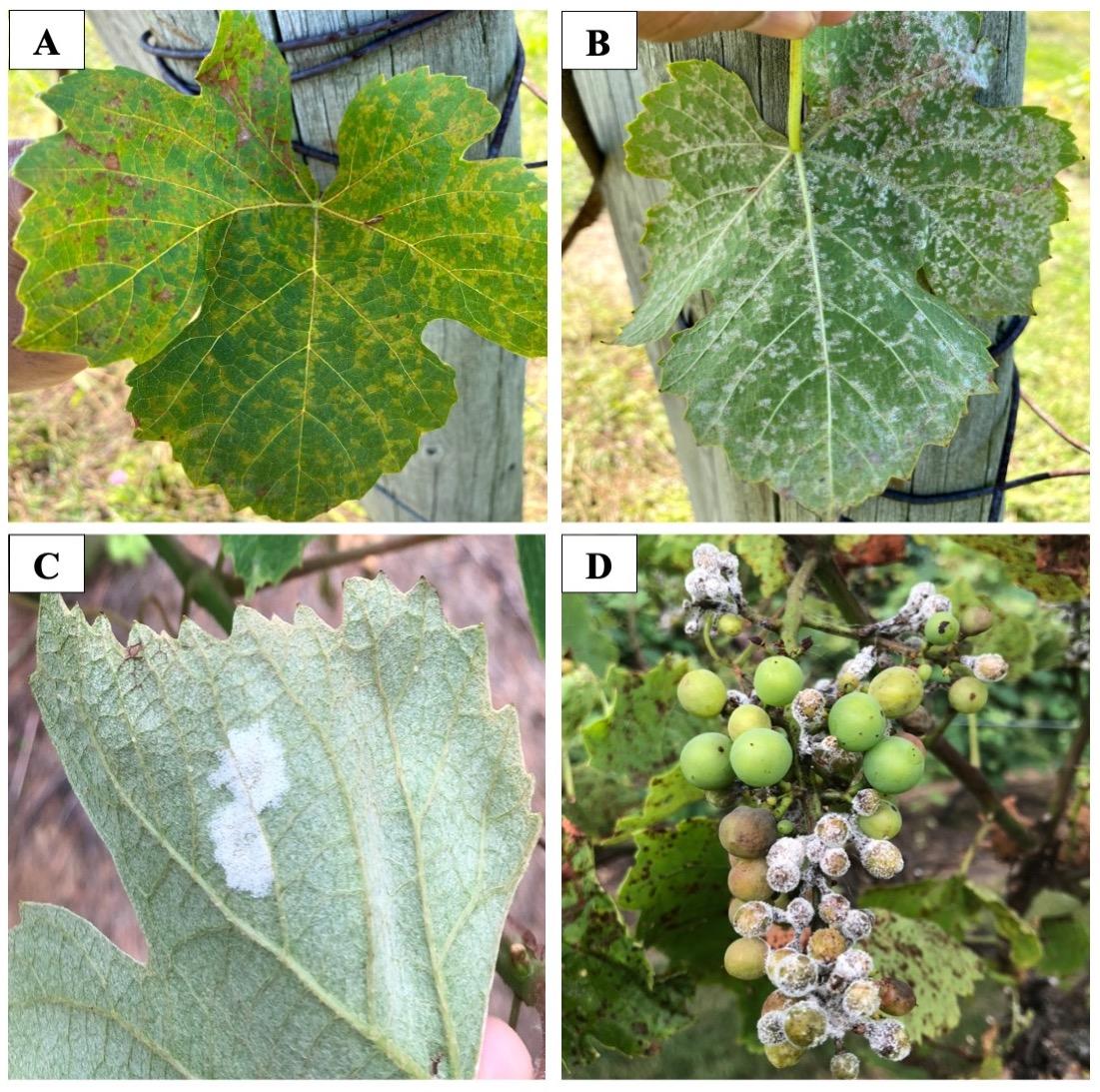 Grape Downy Mildew source
Figure: Downy Mildew on grapevine leaves and fruit. (A) Yellowish “oil spots” on the upper leaf surface; (B) white downy fungal growth (sporangia) on the underside of an infected leaf; (C) close-up of white sporangial masses on the leaf underside under humid conditions; (D) grape berries shriveled and covered in white downy mildew sporulation. Severe downy mildew infections can defoliate vines and destroy entire clusters, leading to major crop losses.
Grape Downy Mildew source
Figure: Downy Mildew on grapevine leaves and fruit. (A) Yellowish “oil spots” on the upper leaf surface; (B) white downy fungal growth (sporangia) on the underside of an infected leaf; (C) close-up of white sporangial masses on the leaf underside under humid conditions; (D) grape berries shriveled and covered in white downy mildew sporulation. Severe downy mildew infections can defoliate vines and destroy entire clusters, leading to major crop losses.
Downy mildew is an oomycete (fungal-like) disease that thrives in warm, humid conditions. It attacks all green parts of the vine, causing yellow lesions on leaves and fluffy white growth on the undersides, eventually turning brown as tissues die. If not controlled, downy mildew can devastate vineyards – in high-pressure years it can cause yield losses of 75–100% in vulnerable varietiespmc.ncbi.nlm.nih.gov mdpi.com . Even moderate infections can reduce grape quantity and quality, making fruit unusable. To prevent such losses, growers must invest heavily in preventive fungicide sprays and other controls. Below is an overview of downy mildew’s economic impact by region over the last ten years:
-
Europe: European vineyards regularly battle downy mildew, especially in wet growing seasons. In France , for example, an “epidemic” of downy mildew in 2023 affected 90% of Bordeaux vineyards, with some producers suffering 100% crop lossmodernghana.com modernghana.com . Yield losses in Bordeaux were so severe that officials sought an “agricultural disaster” declaration for government aidmodernghana.com modernghana.com . Nationally, France’s 2023 wine production was expected to drop despite good conditions in some regions, due in part to mildew damage in the southwestmodernghana.com . In Italy , an unusually wet spring in 2023 led to a rampant downy mildew outbreak that cut the country’s wine output by an estimated 12–14% (down to ~43–44 million hectoliters from 50 million in 2022)reuters.com reuters.com . This equates to roughly 7 million hectoliters of lost wine production nationwide. Certain regions like Abruzzo and Molise lost 40–45% of their grape harvest to downy mildew in 2023, and even some organic growers saw total crop failurereuters.com . These losses translate into hundreds of millions of euros in lost revenue (not to mention subsequent impacts on wineries and exports). Such mildew-favorable years are being linked to changing climate patterns (warmer winters and heavy rains), raising concerns that Europe may see more frequent severe outbreaksmodernghana.com modernghana.com . Even in non-epidemic years, European growers spend heavily on fungicides: virtually 100% of wine grape acreage in the EU is treated to control downy and powdery mildew, with 12–15 spray applications per season being typicalcroplife.org . The cost of these treatments (labor, chemicals, fuel) adds substantially to production costs. Historically, in extreme cases, downy mildew has halved France’s national crop (e.g. 50% loss in 1910 and 1915)croplife.org , and while such a catastrophe was largely averted in the past decade thanks to fungicide use, the constant threat requires vigilance and expenditure every year.
-
North America: In North American vineyards the impact of downy mildew varies by climate. In the humid eastern U.S. and Canada , downy mildew is a persistent threat that must be managed aggressively each season. Without control measures, complete crop loss is possible – “nearly 100% yield loss” can occur if growers fail to manage this diseasefruitgrowersnews.com . This forces growers to spray fungicides frequently (often every 10–14 days during wet periods) and to use canopy management practices to reduce humidity. The direct cost of these fungicide programs is significant, as are the losses when outbreaks occur despite sprays. For example, in wet years like 2018, some vineyards in the Northeast experienced substantial yield reductions where spray schedules faltered (specific loss percentages vary by vineyard and year). In the Pacific Northwest and California , the drier climate usually limits downy mildew, but it still emerges in wet spells or irrigated vineyards. California’s wine regions normally see relatively low downy mildew pressure; however, isolated outbreaks have occurred (e.g. after unseasonal storms), forcing extra fungicide treatments. The economic impact in North America is therefore twofold: the preventative costs incurred annually to avoid an epidemic, and the occasional direct losses when weather favors the pathogen. For instance, growers in states like New York or Ontario budget a significant portion of their annual pest management costs to downy mildew control (multiple spray applications of fungicides like copper or metalaxyl, labor for canopy thinning, etc.). If they did not, the disease could destroy most of their crop in a bad year. In summary, while North America did not see a single blockbuster downy mildew disaster on the scale of Europe’s 2023, the disease’s constant pressure necessitates high management costs (tens of millions of dollars annually across the U.S. and Canada) and occasional yield losses when weather conditions overwhelm control efforts.
-
China: Downy mildew is one of the most devastating grape diseases in China, present in nearly all Chinese vineyardsfrontiersin.org . Many of China’s wine regions have hot, monsoonal climates highly conducive to this pathogen. As a result, Chinese growers face considerable yield losses each year. Research estimates that combined losses from downy and powdery mildew in China average between 8.7% and 23.6% of production annuallyojs.openagrar.de . (In more disease-prone areas or years, downy mildew likely accounts for the higher end of that range.) Severe outbreaks can wipe out large portions of crops if not controlled. To combat this, Chinese vineyards apply intensive spray programs similar to those in Europe. The cost of fungicides and their application raises production costs significantly. Moreover, downy mildew in China can impact quality – infected grapes that don’t reach maturity or develop off-flavors can’t be used for premium wine, reducing the economic value of the yield. As China’s wine industry has expanded in the last decade (with new vineyards in provinces like Shandong, Hebei, Ningxia, etc.), managing downy mildew has become a critical challenge. The economic burden includes not just yield losses (potentially amounting to hundreds of thousands of tons of grapes in bad years), but also the cost of repeated fungicide use and the risk of fungicide resistance development. While specific nationwide loss figures are not always published, it is clear that downy mildew remains a major constraint on China’s vineyard productivity.
-
Australia: In Australia, the arid or Mediterranean climate in many wine regions limits downy mildew’s prevalence compared to wetter regions. However, when conditions are right (extended humidity or unseasonal rain), downy mildew can cause severe damage. For example, parts of Eastern Australia (Riverina, Hunter Valley, etc.) have seen sporadic downy mildew flare-ups after wet weather, leading to crop losses on unprotected vines. Australia’s wine industry commissioned an economic assessment of endemic diseases, which estimated that downy mildew causes an average industry-wide profit reduction of about $63 million AUD per year (in 2009 dollars)wineaustralia.com wineaustralia.com . This figure includes roughly $26 million in lost yield/value and $36 million in added costs annuallywineaustralia.com wineaustralia.com . While downy mildew is not endemic in some dry regions (and Western Australia was historically free of it until the 1990s), the past decade has seen ongoing management needs elsewhere. Australian growers use forecasting and intense monitoring; when weather alerts indicate mildew risk, they promptly apply fungicides. The direct cost comes from these preventative sprays and, if an infection occurs, from crop losses and quality downgrades. Thanks to generally effective management, Australia did not suffer a catastrophe from downy mildew in 2015–2025, but the disease’s potential is illustrated by the constant vigilance maintained. Even a single severe outbreak in a major region could cost tens of millions (in lost grapes and wine). Thus, Australian vineyards consider the money spent on downy mildew prevention as an essential investment to avert larger economic damage.
Table 1. Estimated Direct Economic Impact of Downy Mildew by Region (2015–2025) | Region | Typical Yield Losses and Costs from Downy Mildew (2015–2025) | | — | — | | Europe | 5–20% average yield loss in high-pressure years; up to 80–100% loss in worst-hit areas during severe outbreaksmodernghana.comreuters.com. Example: Italy lost ~12% of national production in 2023 (~7 million hL) due to mildewreuters.comreuters.com. Extensive fungicide programs (12–15 sprays/season) are used at a cost of hundreds of € per hectare to prevent such lossescroplife.org. | | N. America | Highly variable: near 0% loss in arid areas (with minimal sprays) to 100% loss in unprotected humid-region vineyardsfruitgrowersnews.com. Routine fungicide costs are substantial (e.g. Eastern US growers may spend $200–$400/ha annually on downy mildew control). No nationwide failure, but localized outbreaks cause millions in losses. | | China | Estimated 8–24% annual production loss due to downy (and powdery) mildew without controlojs.openagrar.de. Frequent outbreaks in humid regions; severe cases see >50% loss. Intensive spraying is required, raising costs by an estimated 10–20% of production expenses. | | Australia | Typically low incidence in dry years; $63 million AUD/year industry profit loss on average from downy mildewwineaustralia.com. Losses mainly from occasional regional outbreaks (e.g. 10–30% crop loss in affected vineyards) plus preventive spray costs every season in vulnerable areas. |
Notes: The figures above illustrate the direct impact (yield and quality losses, plus control costs) of downy mildew. Europe shows high potential losses (with notable 2023 case studies), North America and China incur heavy preventive costs to avert worst-case losses, and Australia’s losses are intermittent but economically significant. All regions rely on fungicide programs to keep downy mildew at bay, incurring recurring expenditures. In years with favorable weather (dry conditions), losses are minimal; in wet years, this disease can rapidly become an economic disaster without intervention.
Powdery Mildew (Erysiphe necator)
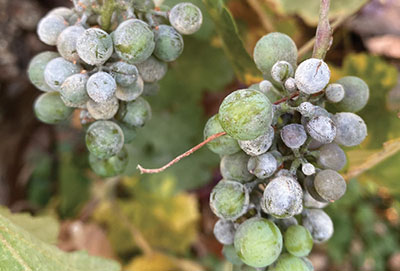 Grape Powdery Mildew source
*Figure: Powdery Mildew on grape cluster.
Grape Powdery Mildew source
*Figure: Powdery Mildew on grape cluster.
Powdery mildew is a fungal disease that is ubiquitous in grape-growing regions and is often considered the costliest wine grape disease worldwide vinecon.ucdavis.edu . It appears as a white, powdery fungal growth on leaves, shoots, and grape clusters. Unlike downy mildew, it thrives in warm dry conditions with moderate humidity (rain can actually inhibit it somewhat), so it is a perennial threat even in drier climates. Powdery mildew directly reduces yields by infecting blossoms and young berries (causing poor fruit set and berry drop) and by shrinking or spoiling infected grapes. Beyond yield, it severely impacts quality: even a 3% infection level on harvested grapes can taint wine with off-flavorswww2.gov.bc.ca . Thus, wineries have near-zero tolerance for powdery mildew on fruit, and growers must prevent infections to produce saleable, high-quality grapes. The economic impact of powdery mildew stems largely from management costs (it is the most expensive disease to control) and quality losses if control falters. Below is an analysis by region for 2015–2025:
-
Europe: Powdery mildew (often called oidium in Europe) has been entrenched in European vineyards since the 19th century. All European wine regions must spray against powdery mildew annually – typically sulfur or other fungicides are applied in multiple rounds from spring through summer. Currently 100% of European vineyards are treated to control powdery mildew (and downy), as noted earliercroplife.org . The average fungicide usage is about 19.5 kg/ha in the EU, largely driven by these mildews, and 12–15 applications per season is commoncroplife.org . This intensive regime is costly: purchasing fungicides (sulfur, QoIs, DMIs, etc.), labor or machinery for spraying, fuel, and equipment maintenance all add to production costs. For example, French and Italian growers might spend several hundred euros per hectare on powdery mildew control each year. These investments are necessary because uncontrolled powdery mildew can cause up to 80% yield loss (as historically happened in France in 1854)croplife.org , and even moderate infections reduce grape quality severely. In the past decade, Europe hasn’t experienced a catastrophic powdery mildew wipeout (thanks to routine control), but there have been instances where weather or fungicide resistance issues led to localized crop losses. For instance, if a wet spring prevented timely sulfur sprays, some vineyards saw 20–30% of clusters ruined by powdery mildew. Additionally, powdery mildew pressure is increasing in some northern European regions as summers get warmer, forcing growers in areas like Germany and England to intensify spraying (raising costs for emerging wine industries there). Overall, in Europe the economic burden of powdery mildew is reflected in consistently high disease management costs every year , rather than large inter-annual yield fluctuations. Quality downgrades (e.g. having to divert mildewed grapes to lower-quality wine or discard them) also represent a hidden cost. European case studies highlight that diligent control is non-negotiable: when mildew is well-managed, yield losses are kept under a few percent, but at the expense of expensive spray programs.
-
North America: In North America, powdery mildew is likewise the number-one disease in terms of grower expense and attention. This is especially true in California , the continent’s largest wine region. Research at UC Davis estimated that California wine grape growers spent about $189 million USD in 2011 on powdery mildew fungicides and their applicationvinecon.ucdavis.edu . By 2020, those annual costs were certainly higher – likely well over $200 million – due to increased labor, material, and fuel expensesdownloads.regulations.gov . These figures underscore that powdery mildew management constitutes a major portion of vineyard operating costs (one industry letter noted it accounts for 74% of all pesticide applications in CA vineyards by weightvinecon.ucdavis.edu ). Growers typically apply 6 to 10 fungicide sprays (sulfur, synthetic fungicides, or biologicals) per season in California’s vineyards to keep mildew in check. Even in dry climates like Napa or Sonoma, the disease pressure is high because the pathogen can thrive in the absence of rain if temperatures are mild. The direct yield loss from powdery mildew in North America is usually kept low (single-digit percentages) thanks to these efforts. However, when weather conditions are very conducive or if a spray program fails (for example, due to fungicide resistance development or missed applications), severe losses occur. In Oregon and Washington, some growers reported significant crop losses in years with unusually cool, cloudy summers (ideal for mildew). In East Coast vineyards (New York, Virginia, etc.), powdery mildew is also a perennial issue; though downy mildew and other diseases get attention due to rainfall, powdery requires its own set of sprays even in relatively dry spells. Besides the cost of chemicals, North American wineries enforce quality standards – loads of grapes with visible mildew may be rejected or discounted, directly hitting growers’ income. For premium wine grapes, even subtle powdery mildew infection can reduce wine quality, translating to economic losses through lower bottle prices or brand reputation damage. As a result, North American viticulture has seen interest in developing mildew-resistant grape varieties . Economic analyses suggest that adopting powdery mildew resistant cultivars could save California growers on the order of $48 million per year in management costs if widely plantedsciencedirect.com . In summary, powdery mildew costs North America’s grape industry tens to hundreds of millions of dollars each year, mostly in prevention, and remains the most significant disease management concern for growers across the continentvinecon.ucdavis.edu .
-
China: Powdery mildew in China often occurs alongside downy mildew, and together they form a twin threat. Chinese vineyards, especially in drier inland areas or seasons, deal with powdery mildew outbreaks that can coat leaves and berries in the characteristic white fungal growth. The annual production loss due to powdery mildew in China has been estimated in some studies to be in the high single digits percentage-wise (one source indicates around 8–10% on average)ojs.openagrar.de , though losses can spike higher in bad years. Like elsewhere, Chinese growers apply sulfur and modern fungicides; however, the disease can still cause quality downgrades. A challenge in China is that many newer wine regions are still developing best practices, and occasional knowledge or technology gaps can lead to underestimating powdery mildew until damage is done. For instance, if a grower from a more arid region uses insufficient spraying in a relatively humid year, powdery mildew can spread and cut yields significantly. In terms of direct costs, the necessity of fungicide inputs to manage powdery mildew increases the cost of production per hectare. Some Chinese wine regions are also experimenting with resistant grape varieties or canopy structures (like rain shelters) to mitigate both mildews, representing capital investments aimed at reducing future economic losses. While comprehensive nationwide cost figures are not readily published, the impact is clearly substantial : nearly all major Chinese vineyards must budget for powdery mildew control annually, and any lapse can cause economic damage through lost crop and inferior wine quality.
-
Australia: Powdery mildew is regarded as the highest-impact disease in Australian viticulture. The Australian wine industry analysis ranked powdery mildew as the top disease in terms of economic impact (higher than downy mildew, botrytis, or phylloxera)wineaustralia.com wineaustralia.com . On a national scale, powdery mildew was estimated to cause about $76 million AUD per year in reduced profit for growers (long-term average)wineaustralia.com . This is slightly more than downy mildew’s impact in Australia. The losses come roughly half from yield/quality reductions and half from increased costswineaustralia.com . Powdery mildew is well-suited to many Australian climates (warm and dry); thus even in places where downy is rare, powdery mildew can flourish. Preventive sulfur sprays are standard in virtually all Australian vineyards, including those in South and Western Australia. In very hot inland areas, mildew pressure can be lower, but mornings with dew or overhead irrigation can create pockets of outbreak. There have been notable instances in the last decade where lapses in spraying (for example, in organic blocks or during stretches of bad weather that delayed spray schedules) led to powdery mildew epidemics, inflicting heavy crop losses. One such case occurred in parts of South Australia in a particularly mild, cloudy summer: growers reported 20–40% crop losses and significant quality penalties due to powdery mildew that year. Australian winemakers are also very stringent—grapes with mildew will be rejected or result in downgrading of wine, affecting grower payments. Consequently, the economic strategy is heavy prevention : even if the disease doesn’t show, the cost is incurred to ensure it doesn’t appear. The $76M figure reflects, for example, that across all regions and years, Australia’s wine grape sector might lose on the order of tens of thousands of tonnes of grapes (or equivalent value) to powdery mildew if it were not managed. With management, actual realized losses are kept lower, but at the expense of those treatment costs. In recent years, concerns about fungicide resistance in powdery mildew populations have grown (some strains less sensitive to certain fungicides), prompting research and some changes in chemical use. This is a long-term concern: if resistance makes sprays less effective, the cost could be even higher either through more frequent applications or yield losses. Overall, Australia’s experience mirrors the global theme: powdery mildew is a chronic, costly problem that demands resources every single season.
Table 2. Estimated Direct Economic Impact of Powdery Mildew by Region (2015–2025) | Region | Typical Economic Impact of Powdery Mildew (Yield Loss & Control Cost) | | — | — | | Europe | Pervasive management costs: All vineyards require mildew control (sulfur/fungicides). ~12–15 sprays/season commoncroplife.org. Without control, yield losses up to 70–80% possible (historical examples)croplife.org, but with control, yield loss is kept low (usually <5%). Quality risk is high: infection >3% of berries can ruin wine flavorwww2.gov.bc.ca, leading to economic loss via downgraded wine. | | N. America | Highest cost disease: e.g. California ~$189M/year (2011) on fungicide programsvinecon.ucdavis.edu; likely >$250M by 2025downloads.regulations.gov. Routine yield loss minimal under good control, but zero tolerance for infection means heavy spraying. Outbreaks (if control fails) can cause 20–50% yield loss in affected vineyards and severe quality penalties. Adoption of resistant varieties could save ~$48M/year in CAsciencedirect.com. | | China | Significant ongoing losses: Combined with downy mildew, causes ~10–20% average yield loss in many regionsojs.openagrar.de. Requires intensive fungicide use (raising costs ~15% per season). If uncontrolled, can devastate clusters; controlled, keeps losses to single-digits at high expense. Quality-driven losses (unmarketable grapes) occur if mildew appears near harvest. | | Australia | Costliest disease in AU: ~$76 M AUD/year profit loss (long-term) from powdery mildewwineaustralia.com. Growers routinely apply sulfur and other fungicides; typical yield loss with control <5%. Occasional lapses lead to local losses of 30%+ of crop. Quality downgrades and winery rejections add economic cost even if tonnage is only moderately affected. |
Notes: Powdery mildew does not usually cause dramatic one-year national crop failures in modern times because it is proactively controlled. Instead, its impact is seen in the annual cost of protection and the subtle but significant losses in quality and yield when it breaks through. Europe and Australia both incur heavy spray costs each year; North America, especially California, spends an exceptionally large sum on mildew control and stands to lose equally large values if it’s not controlled. China faces similar challenges as it expands viticulture. The table highlights that for powdery mildew, preventative expenditure is a major part of the economic burden, and this has been consistently true through 2015–2025.
Virus-Induced Diseases (Grapevine Viruses)
Virus diseases in grapevines, unlike the acute fungal mildews, often have a more chronic but still profound economic effect. The most prevalent and damaging are grapevine leafroll disease (caused by a complex of related viruses, especially Grapevine Leafroll-associated Virus 3) and the newly recognized grapevine red blotch disease (caused by Grapevine Red Blotch Virus, GRBV). Other viruses such as fanleaf virus (Grapevine Fanleaf Virus) and rugose wood complex viruses also contribute to vine decline. These viruses are typically vector-spread or transmitted in planting material and cause symptoms like leaf discoloration (red or yellow roll in leaves), reduced photosynthesis, poor fruit ripening (lower sugar accumulation), and vine vigor decline. The economic impacts of grapevine viruses manifest in reduced yield , diminished fruit quality (especially lower sugar and color) , and the need to prematurely replant vines . Unlike mildews that can be treated during the season, virus infections are systemic and cannot be cured in an infected vine – management relies on prevention (clean plant stock, vector control) and roguing out diseased vines. Over a 10-year period, virus diseases can silently erode a vineyard’s profitability. Below we examine the impacts by region:
-
Europe: European vineyards have a long history with viruses like leafroll and fanleaf. Many old-world vineyards contain a percentage of virus-infected vines, which reduce yield and quality gradually. In the past decade, Europe has intensified efforts to use certified virus-free planting material when establishing new vineyards, but older plantings still suffer some incidence of disease. The direct economic cost in Europe is seen in lost yield potential – grapevine leafroll can cause anywhere from 10% up to 30–50% reduction in yield in infected vines (depending on severity and cultivar)ajevonline.org . It also delays ripening, which in cool climates can mean grapes don’t reach desired sugar levels, forcing wineries either to reject the grapes or produce lower-quality wine. For example, a Bordeaux or Rioja vineyard heavily infected with leafroll might consistently produce grapes with 1–2 °Brix lower sugar and poorer color, leading to a lower classification or price for that wine. Over years, this is a substantial opportunity cost. While precise figures in Europe are hard to aggregate (because virus impact is diffuse and often managed by gradual replanting), some studies have noted that without control, leafroll disease in high-value European wine grapes could cause extremely high losses – one modeling study put potential losses up to $226,000 per hectare over a vineyard’s 25-year lifespan in worst-case scenariosfrontiersin.org . In practice, European growers mitigate this by removing and replacing diseased vines incrementally. This represents a replanting cost (young vines cost money and take 3+ years to produce, which is lost revenue). Regions like Champagne, Tuscany, and others have programs to monitor viruses because of trade implications as well (movement of cuttings between EU countries requires virus indexing). Another notable issue in Europe is Grapevine Flavescence Dorée , a phytoplasma disease (not a virus, but often mentioned alongside virus diseases due to similar vector spread and effect) which caused serious outbreaks in Italy, France, and Spain in the 2010s and 2020s, leading to compulsory vine removals – this indirectly highlights the economic fear of systemic diseases. In summary, European vineyards face moderate direct losses each year from viruses (perhaps a few percent of total production in affected areas) but more importantly, long-term losses : an infected block produces inferior yield/quality until costly replanting is done. Thus the economic strategy has been investing in clean plants and roguing, to avoid the higher cumulative losses that unchecked virus infections would cause.
-
North America: Virus-induced diseases have come to the forefront of North American vineyard management in the past decade. Grapevine Leafroll Disease (GLD) has been present for a long time, but efforts to quantify its economic toll were made around the 2010s. A study on Cabernet Sauvignon in Napa Valley, California, found that GLD can cost on the order of $25,000–$40,000 USD per hectare over the lifetime of a vineyard (net present value), assuming yield reductions of 30–50% and some quality penalty for sugar reductionajevonline.org . If quality is severely impacted (for instance, fruit from infected vines only attains lower brix suitable for cheaper wine), losses mount further. In fact, when both yield and quality losses are considered, the 25-year economic loss from leafroll in a worst-case scenario (no intervention) was estimated at up to $226,405 per hectare frontiersin.org (for a premium variety), which aligns with the aforementioned European scenario. In response, many California growers in the last 10 years have adopted aggressive measures: mapping virus spread, controlling mealybug vectors, and removing infected vines or entire vineyards. This itself is costly — replacing an entire vineyard can cost tens of thousands of dollars per hectare in replanting and lost production for a few years. Similarly, in Washington State, Oregon, and New York , virus management has become a significant concern. The discovery of Grapevine Red Blotch Virus (GRBV) around 2012 in California created a new economic challenge. Red blotch causes delayed ripening and lower sugar accumulation, similar to leafroll, and has now been found across multiple states and even in Canada. Research indicates red blotch disease can cause economic losses ranging from about $2,200 up to $68,500 per hectare (cumulatively over 25 years) depending on infection rate and management practicespmc.ncbi.nlm.nih.gov . If no action is taken to control GRBV spread, one projection put the upper loss at ~$68k/ha (similar to losing an entire vintage or more over the vineyard’s life)pmc.ncbi.nlm.nih.gov . In practice, growers confronted with red blotch have sometimes opted to remove vines early; for example, some Napa vineyards removed blocks of red varietals in mid-decade when it was clear they couldn’t ripen past ~19°Brix due to the virus. The cost of such an action is immediate (the expense of pulling vines and replanting, plus 3-5 years of no crop from that block) but is weighed against the long-term cost of keeping an unproductive infected vineyard. North American wine regions also feel virus impacts in quality: wineries have reported having to declassify wines or adjust blends if virus-affected fruit doesn’t meet the standard, indirectly hitting revenues. On top of the vineyard-level impact, there are broader economic effects : for instance, in the 2010s the spread of leafroll in vineyards of Napa/Sonoma led to a whole support industry of testing labs and nurseries providing clean plants – an investment, but also an economic shift where money is spent on virus prevention that could have gone into yield expansion. Overall, in 2015–2025, North America likely spent many millions on virus management (testing, roguing, replanting) and still incurred losses from reduced yields. It’s difficult to sum into one number, but one can safely say virus diseases have become a multi-billion dollar concern when projected over the coming decades in North Americanap.nationalacademies.org , prompting ongoing research and grower education efforts.
-
China: China’s experience with grapevine viruses is relatively more recent in focus. As the industry is younger, many vineyards were planted with certified material in recent years, but there have been detections of viruses such as leafroll in Chinese vineyards. Additionally, grapevine red blotch virus was reported in Asia (including China) within the last decadepmc.ncbi.nlm.nih.gov . The current incidence in China is not as thoroughly documented in literature as in the West, but the risk is acknowledged. If viruses spread widely in China, the economic consequences could be severe given the large scale of new vineyards. An infected vine will yield less and lower-quality fruit, meaning a grower gets less return on investment for that vine’s fruit each year. In regions aiming for high-quality wine (e.g. Ningxia’s cabernet-based wines), viruses could undercut those quality gains. We can extrapolate from global data: should leafroll or red blotch establish in, say, a 100-hectare Chinese vineyard and cut yields by 20%, the winery could lose a significant tonnage of grapes (maybe 200–300 tons) every year until replanting, valued in the millions of yuan, plus the cost of replanting itself. The Chinese wine industry and researchers are aware of this and are likely increasing virus indexing and use of virus-free propagation stock to avoid importing these issues. So far in 2015–2025, China has not reported a massive outbreak of a grapevine virus requiring large vine removals (nothing on the scale of what some California vineyards did), but the preventative effort and surveillance are part of the economic picture. There is also some evidence that certain viruses (like leafroll) are present in East Asia but perhaps different strains or lower incidence; nonetheless, the potential is there for increased impact if vectors (like mealybugs) spread the disease. In summary, China’s direct economic losses from viruses in the past decade appear limited (relative to mildew losses), but the industry is working to ensure it stays that way, knowing the heavy long-term cost viruses could impose.
-
Australia: Australian vineyards historically benefited from strict quarantine that kept many grape viruses out or at low levels. For example, Australia has had relatively low incidence of leafroll disease in the past. However, the country is not virus-free. There are isolated cases of leafroll and other viruses in older plantings. Moreover, in 2022, Grapevine Red Blotch Virus was detected for the first time in Australia (in imported planting material that was in post-entry quarantine)pmc.ncbi.nlm.nih.gov . The detection prompted swift quarantine actions to prevent its spread into vineyards. This underscores how Australia treats virus diseases as a serious biosecurity and economic threat. The direct economic impact within 2015–2025 in commercial vineyards was minor in terms of losses (since viruses are still relatively contained), but Australia does incur costs in maintaining that status: rigorous testing of imported vines, certification programs for nurseries, and roguing any symptomatic vines. Should a virus like leafroll or red blotch get loose in Australia’s vineyards, the potential cost is high – likely mirroring what has been modeled elsewhere. For instance, even a 10% incidence of leafroll in a high-value Shiraz vineyard in Barossa would reduce yields and force quality downgrades, costing that vineyard thousands of dollars per hectare annually. Hence, the Australian industry’s preventive stance is economically justified. One virus complex that has affected Australia is Grapevine rupestris stem pitting-associated virus (one of the rugose wood complex), which can affect vine vigor; growers have had to replant some affected vines. Quantifying virus impact in Australia for the last decade: it remains mostly preventative costs and minor local losses. However, the vigilance is part of the economic story—the industry invests in keeping viruses out to avoid the far greater losses that would result from an epidemic.
Table 3. Estimated Economic Impact of Grapevine Virus Diseases by Region | Region | Economic Impact of Virus-Induced Diseases (2015–2025) | | — | — | | Europe | Chronic losses: Leafroll and other viruses cause ongoing yield reductions (often 10–30% in infected vines) and delayed ripening. Quality losses (lower sugar/color) force lower-priced wine production. Over decades, a virus-infected vineyard can lose tens of thousands of euros per hectare. Growers spend on certified vines and replanting to mitigate this. | | N. America | High-value impact: In California and elsewhere, leafroll and red blotch cut yields and wine quality; unmanaged, GLD can cost ~$25–40K/ha in a single vineyard’s lifetimeajevonline.org (up to ~$226K/ha in worst cases)frontiersin.org. Industry-wide, millions spent on virus testing, vector control, and vine replacement. Entire blocks have been replanted to avoid ongoing losses. | | China | Emerging risk: Current losses from viruses are relatively limited but present. Some vineyards show leafroll symptoms with yield/quality hits (exact % not widely reported). The industry is investing in prevention (clean plant programs) to avoid larger future losses, knowing that unchecked virus spread could cost many millions (via reduced output and replant costs) over time. | | Australia | Preventative stance: Very low incidence of major grape viruses so far, so negligible yield loss industry-wide in 2015–2025. However, significant resources are devoted to quarantine and certification. The avoided impact is large: a widespread leafroll or red blotch outbreak could be devastating, so Australia’s economic focus is on keeping these viruses out (a cost that pays off by preserving yield and quality). |
Notes: Virus diseases in grapes act as a silent economic drain – infected vines produce less and poorer fruit every year. The tables above emphasize that unlike sudden epidemics, viruses cause cumulative losses that can equal or exceed the acute losses from mildews, especially for premium wines. North America has quantified these losses in studies (see figures for per-hectare impacts), which likely translate similarly to Europe and other regions with high-value vineyards. The economic response in all regions is to invest in virus prevention and cleanup (which is costly upfront but spares larger long-term losses). In regions where viruses are established (Europe, N. America), this means ongoing removal of diseased vines and replacing them – effectively a constant renovation cost added to vineyard management. In regions where viruses are not yet widespread (China, Australia), significant economic emphasis is on surveillance and exclusion to protect the industry’s future.
Secondary Economic Impacts and Long-Term Concerns
Beyond direct yield and quality losses and control costs, these vineyard diseases also create secondary economic impacts that have become evident over the last decade:
-
Labor and Operational Disruptions: Disease outbreaks can disrupt the normal workflow and labor requirements in vineyards. For instance, a severe mildew outbreak may require sudden, labor-intensive interventions (such as additional spraying, leaf removal, or cluster thinning of diseased fruit). This can lead to higher labor costs and logistical challenges, especially if outbreaks coincide with other crucial vineyard tasks. In some cases, if crop losses are extreme (e.g. a virus-infected block is yielding so little it’s not worth harvesting), seasonal labor work may be reduced or redirected, affecting laborers’ income and the scheduling for wineries. Additionally, skilled labor is needed to monitor and manage these diseases (for example, viticulturists scouting for early downy mildew lesions or virologists testing vines for viruses), which is an added expense. During the COVID-19 pandemic (2020), labor shortages in agriculture amplified concerns: if workers were unavailable to do timely disease management (spraying, etc.), vineyards risked greater disease damage – a clear intersection of a labor disruption with disease impact. Thus, maintaining a reliable workforce is part of the economic resilience against vineyard diseases.
-
Trade and Export Limitations: Plant diseases can prompt regulatory measures that affect trade. For example, certain grapevine viruses and diseases are regulated in the international trade of vine plant material (cuttings, rootlings). Regions with known virus problems might face restrictions on exporting vine material or have to undergo costly certification, which can impact the nursery industry and international collaborations. An illustrative case is the movement of vine stocks between countries: an outbreak of a quarantine disease like flavescence dorée in Europe led to stricter controls on moving vines from affected zones, which indirectly costs time and money for compliance. Additionally, when Europe or other major producers suffer large crop losses (as with downy mildew in 2023), global wine trade can shift – if Italy produces 7 million hL less wine, prices may rise or import/export patterns adjust (France regaining the top producer spot in 2023 due to Italy’s losses is an examplerfi.fr reuters.com ). Although consumers eventually see some of these effects as price changes, the wine trade businesses experience them as fluctuations in supply availability, contractual fulfillments, and possibly needing to source wine from alternate regions to meet demand. Another angle is export quality : if widespread powdery mildew forces a region to use more sulfur or other treatments, there could be residues or style changes that affect market perception abroad. While hard to quantify, these diseases absolutely play a role in the broader economic ecosystem of international wine trade.
-
Long-Term Vineyard Sustainability: Repeated disease pressure and the measures to combat them raise questions about sustainability – both environmental and economic. The heavy use of fungicides for downy and powdery mildew, while necessary, has environmental costs and can lead to fungicide resistance in pathogens, which is already being observeddownloads.regulations.gov downloads.regulations.gov . If common fungicides become less effective, growers may face higher costs to switch to new products or more expensive integrated methods. Environmentally, regulations in the last decade have tightened around copper and other chemicals in Europe, pushing growers to find alternatives – sometimes at higher cost. From an economic sustainability perspective, vineyards with persistent virus infections or trunk diseases (like esca or eutypa, which often interplay with virus impacts on older vines) may have shortened productive lifespans, meaning a vineyard might need replanting after 15–20 years instead of the 30+ years that could be possible. This accelerates capital expenditure cycles (a clear economic impact). The resilience of vineyards to climate change is also a concern: as climates shift, regions that were borderline for certain diseases might become more susceptible (e.g. England now needs mildew control, Burgundy seeing more downy mildew in very warm/wet seasons, etc.), potentially increasing the economic burden in areas previously less affected. In Australia, for example, some regions might get more humidity or unseasonal rain with climate variability, making downy mildew more common and requiring new investments in infrastructure (like improved drainage, canopy covers, etc.). All these factors feed into the long-term profitability and viability of vineyards. Sustainable practices (breeding resistant grape varieties, improving canopy management, using forecasting models to optimize spray timing) have been a focus in 2015–2025 to counteract these secondary effects. While such changes might involve upfront costs (breeding programs, new vineyard designs), they are aimed at reducing the chronic economic drag of these diseases in the future.
In conclusion, the decade of 2015–2025 has underscored the massive economic impact of downy mildew, powdery mildew, and grapevine viruses on the global wine industry. Direct losses in yield and quality, measured in the billions of dollars worldwide, have occurred despite intensive management. Europe and North America saw especially notable events (from Europe’s mildew-induced harvest shortfalls to North America’s confrontation with newly characterized viruses), while China and Australia also navigated these threats through proactive measures. The comparisons by region and disease show that no region is entirely spared : whether it’s the cost of spraying, the hit to yields, or the need to replant vines, growers everywhere pay a price. Moreover, secondary impacts like labor needs, trade adjustments, and sustainability challenges add layers to the economic burden. The continued sharing of knowledge and improvements in disease management—such as forecasting systems for mildews or the development of virus-resistant rootstocks and grape varieties—offer hope that the next decade (2025–2035) might see more effective and economically efficient control, safeguarding both the productivity and the profitability of vineyards around the worlddownloads.regulations.gov pmc.ncbi.nlm.nih.gov . Sources: Recent research articles, industry reports, and news from 2015–2025 were used to compile data for this analysis. Key references include academic studies quantifying virus losses (e.g. Ricketts et al. 2015)frontiersin.org , economic assessments by wine industry bodieswineaustralia.com wineaustralia.com , and press coverage of major disease outbreaks (Reuters, RFI, Decanter)reuters.com modernghana.com , among others. These are cited throughout the report to substantiate the figures and examples provided.chaptalization. The continued pursuit of virus-free vineyards and early disease detection (as exemplified in Australia’s quarantine success and NASA’s imaging tools) is crucial to sustaining long-term profitability in the face of these vineyard viruses.